
By Dr. Elise Grenier, MD · Updated June 2026 · 6 min read
 Microdosing Accutane is all over TikTok, Marie Claire, and dermatology forums — marketed as the gentler, modern path to clear skin. Patients walk into our San Francisco clinic every week having already researched it. We respect that. But “fewer side effects” is not the same as “no side effects,” and the full picture is rarely told in a 60-second reel.
What Is Microdosing Accutane?
Microdosing Accutane means taking low-dose isotretinoin — usually 10–20mg daily, or a few times per week — instead of the standard weight-based dose. Same molecule, smaller amount.
Standard-dose Accutane is effective but brutal: severe dryness in 80–90% of users, nosebleeds, joint pain, elevated liver enzymes, and a birth defect risk so serious it requires a federal monitoring program. At a fraction of the dose, the intensity of those side effects drops meaningfully. For patients who couldn’t tolerate full-dose Accutane, that’s a genuine improvement — and it’s the part the trend gets right.
Does Acne Come Back After Low-Dose Accutane?
Often, yes — and this is the trade-off the trending content consistently leaves out. The National Library of Medicine identifies higher relapse rates as the defining drawback of low-dose isotretinoin: fewer side effects, but results that don’t last. Studies put acne recurrence at 30–40% after stopping treatment — and that rate climbs on lower-dose protocols.
What starts as a 6-month plan quietly becomes a year, then two, then indefinite. Patients aren’t ending their acne; they’re renting a cease-fire.
What Stays the Same on Low-Dose Accutane?
Lowering the dose doesn’t lower the regulatory or monitoring burden. Here’s what every isotretinoin patient still faces:
- iPLEDGE enrollment is mandatory at any dose. For women who can become pregnant, that means a monthly pregnancy test, two simultaneous forms of birth control, and a 7-day window to pick up each prescription. Miss the window and the clock resets — every 30 days, for 12 to 18 months. The pill may be smaller; the overhead is not.
- Dry lips and sun sensitivity persist. Both remain among the most commonly reported isotretinoin side effects even at the lowest doses. The severity decreases, but neither disappears.
- Blood monitoring continues. Liver function and lipid panels are required throughout treatment, regardless of dose — an ongoing time and cost commitment that microdosing marketing often underplays.
What Is AviClear and How Does It Work?
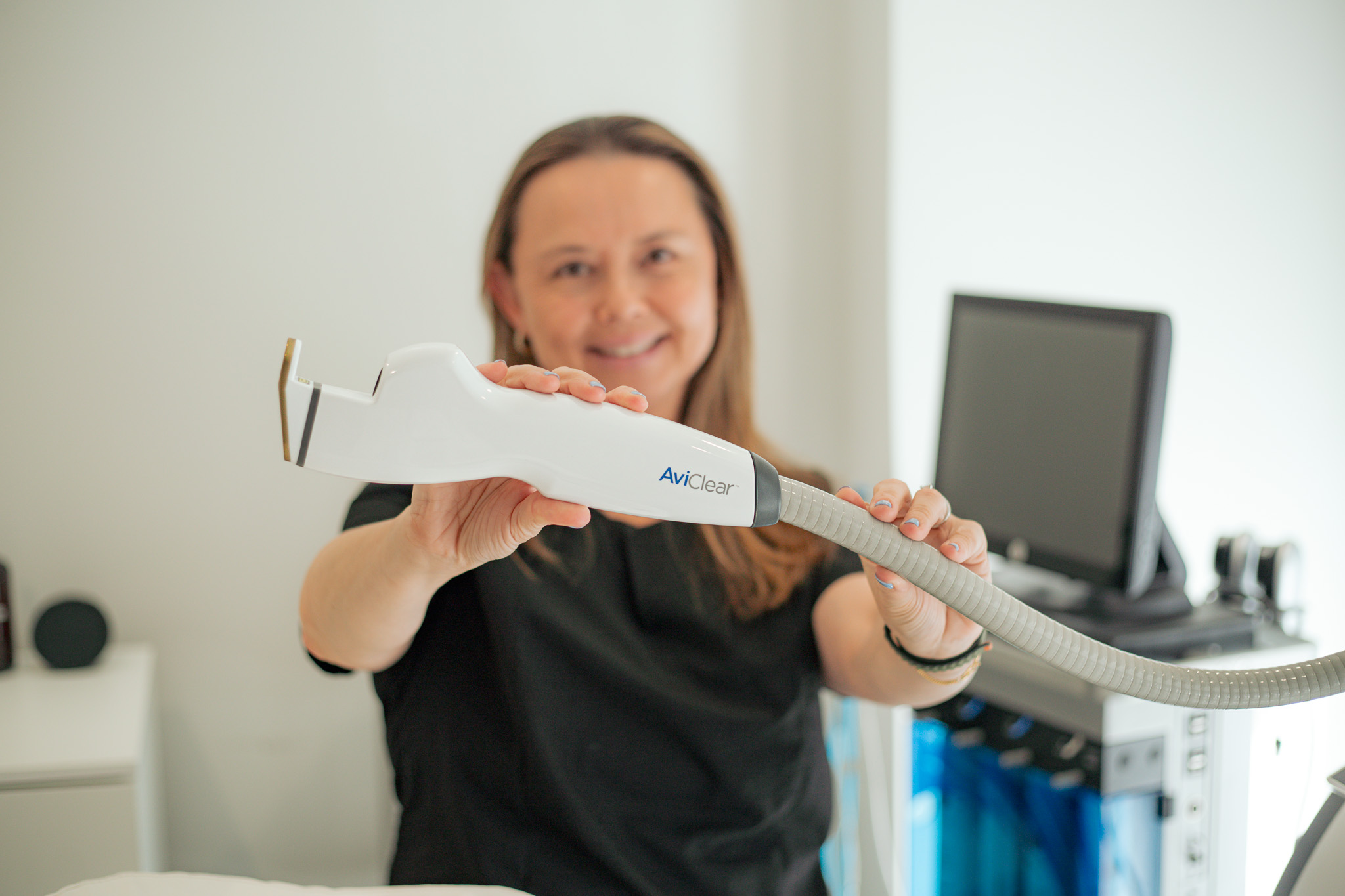
AviClear is an FDA-cleared acne laser treatment — the first energy-based device designed specifically to suppress sebaceous gland activity, the root cause of acne, without oral medication or systemic exposure. Cleared by the FDA in 2022, its 1726nm wavelength is selectively absorbed by lipids inside the sebaceous glands, delivering controlled thermal energy that physically shrinks oil production over time.
Surrounding tissue is unaffected, and because the wavelength bypasses melanin entirely, AviClear is safe for all skin tones — including darker skin types where many lasers carry risk.
The treatment plan: three sessions, thirty minutes each, done in three months.
How Long Do AviClear Results Last?
Because AviClear physically remodels the glands rather than pharmacologically suppressing them, results continue to deepen after treatment ends — the opposite trajectory of microdosing:

Two years out, most AviClear patients are still clear. Two years into microdosing, many patients are still on the drug.
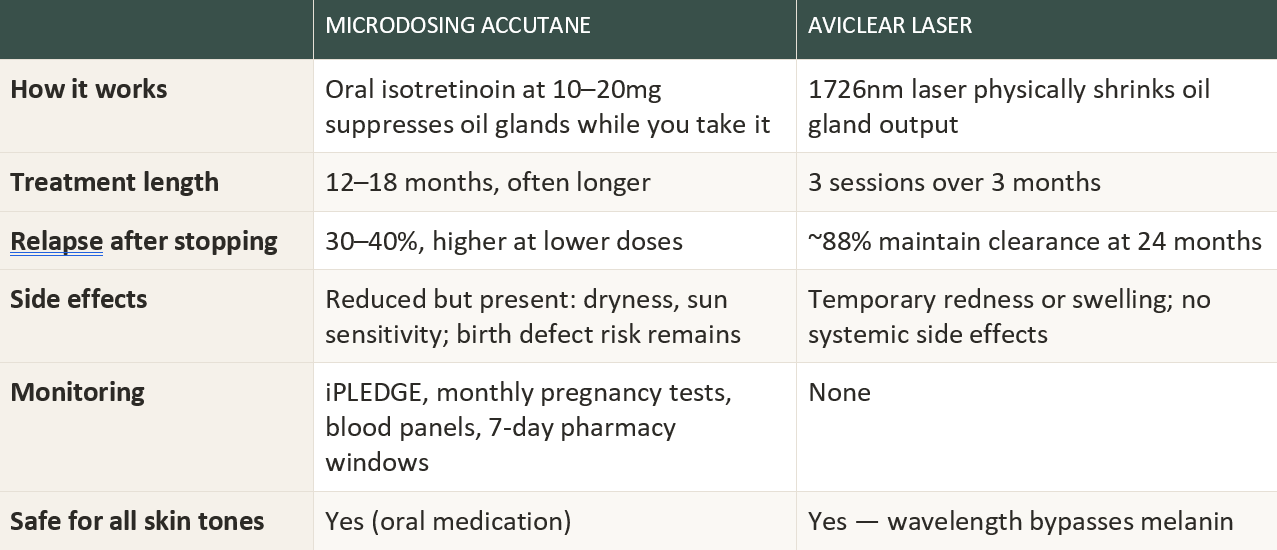
AviClear vs. Microdosing Accutane: Side-by-Side
Which Acne Treatment Is Right for You?
Microdosing is asking: how do we make this drug tolerable for 12–18 months or longer? AviClear is asking: what if you didn’t need a drug at all?
For patients with severe, treatment-resistant cystic acne, isotretinoin at any dose may still be the right answer — and if it is, we’ll say so. But for the vast majority arriving at consultations because microdosing sounds gentler, three months of laser treatment — no systemic side effects, no monthly pharmacy runs, no blood draws, and no open-ended timeline — is a cleaner path to the same destination.
Frequently Asked Questions
How many AviClear sessions do I need?
Three 30-minute sessions, spaced about a month apart. The full treatment course is complete in roughly three months, and results continue improving for up to a year afterward.
Is AviClear FDA-cleared?
Yes. AviClear received FDA clearance in 2022 for mild, moderate, and severe inflammatory acne vulgaris — the first energy-based device cleared specifically for acne’s root cause.
Does AviClear work on dark skin?
Yes. The 1726nm wavelength targets lipids in the oil glands and bypasses melanin entirely, making it safe and effective across all skin tones.
Does AviClear hurt?
Most patients describe a warming or light snapping sensation. The device uses built-in contact cooling, and no numbing or downtime is required — you can return to your day immediately. (Though we do include numbing with our treatments)
How much does AviClear cost in San Francisco?
Pricing depends on your treatment plan. Our $99 consultation includes a full clinical skin assessment and AviClear candidacy review, and the fee applies in full toward whichever package you choose.
Results vary. AviClear is FDA-cleared for mild to severe inflammatory acne vulgaris. Individual outcomes not guaranteed. This article is for educational purposes and does not constitute medical advice.